
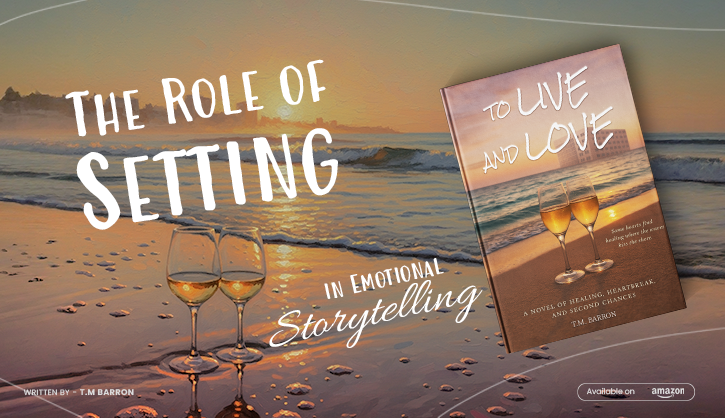
In storytelling, setting is often thought of as merely a backdrop location where the plot unfolds. However, for writers who wish to craft deeply emotional and immersive narratives, setting is far more than scenery. It shapes mood, reflects inner states of characters, and reinforces themes, becoming almost a character in its own right. The careful choice and development of setting can transform a story from ordinary to extraordinary, leaving readers not only visualising the world but feeling it.
A powerful setting amplifies emotion. Consider the difference between a character’s despair expressed in a bright, bustling city versus an isolated, storm-tossed landscape. The latter immediately conveys loneliness, vulnerability, and tension. By aligning the environment with the emotional arc of the character, authors can enhance the reader’s empathy and engagement. Setting can act as a mirror to the protagonist’s internal struggle, subtly reinforcing the story’s emotional undertones.
Settings also serve symbolic purposes. A crumbling house may represent a character’s deteriorating mental state, while a sunrise might symbolise hope, renewal, or transformation. Nature, architecture, and weather are tools that writers can use to communicate meaning beyond dialogue or internal thought. Through metaphorical and symbolic use of setting, the emotional depth of the narrative is enhanced, providing readers with multiple layers of interpretation.
Another critical function of setting is immersion. Readers are drawn into stories when they can vividly imagine the world in which events occur. Details such as smells, sounds, and textures create a sensory experience that strengthens emotional resonance. For example, describing the scent of rain on dry earth, the rustle of autumn leaves, or the echoing footsteps in an empty hallway evokes emotion and memory, allowing readers to inhabit the story as if it were real.
Furthermore, setting can influence character development. A character navigating a harsh environment, be it a remote wilderness, a chaotic urban landscape, or a confined space, must adapt, revealing resilience, vulnerability, or moral choices. Challenges imposed by the setting can catalyse transformation, heighten tension, and deepen the narrative. In this way, setting becomes an active force that shapes both plot and emotional growth.
Writers can also use contrast in setting to highlight emotional change. A protagonist moving from darkness to light, chaos to calm, or isolation to connection mirrors internal evolution. Shifts in setting can reinforce narrative pacing and emphasise turning points, making emotional highs and lows more palpable for readers. The environment is not passive; it interacts dynamically with characters and plot, heightening the story’s impact.
Practical techniques for using setting effectively include sensory layering, symbolic imagery, and emotional alignment. Sensory layering involves integrating sight, sound, touch, taste, and smell to create a fully immersive experience. Symbolic imagery gives depth to the environment, allowing the setting to echo themes and emotions. Emotional alignment ensures that every description reinforces the mood or inner state of the character, creating a cohesive and compelling reading experience.
Importantly, the role of setting is not limited to natural environments. Urban landscapes, historical periods, or imagined worlds also carry emotional weight. A bustling city can convey alienation, opportunity, or danger. A quiet village might evoke nostalgia, security, or isolation. Even fantastical settings can mirror human emotion and thematic depth when crafted thoughtfully.
In conclusion, setting in emotional storytelling is far more than a backdrop; it is a vital tool that shapes mood, symbolism, immersion, and character development. Thoughtful, evocative settings allow readers to experience the story on multiple levels, connecting emotionally to characters, themes, and narrative arcs. By integrating setting as an active, emotionally resonant element, writers elevate their stories from simple narratives to immersive journeys that linger in the minds and hearts of readers long after the last page is turned.