
Great love stories make us feel deeply. They stay with us long after the final chapter ends, echoing in quiet moments and reshaping how we see relationships. At the center of these unforgettable narratives lies emotional storytelling, the craft of creating stories that move readers beyond surface romance and into genuine emotional experience.
The most powerful love stories do more than entertain. They awaken something personal. They reflect longing, heartbreak, courage, and healing in ways that feel achingly real. Through intentional emotional storytelling techniques, authors create characters whose struggles mirror our own and whose growth inspires hope.
Romance readers crave authenticity. They want to witness vulnerability, emotional evolution, and the slow rebuilding of trust. They want to see love not as fantasy perfection, but as something earned through courage and self-discovery. This is what transforms a romance novel into something transformative. Emotional storytelling connects hearts to pages—and keeps them there.
What Makes Stories That Touch the Heart So Powerful
The romances that linger with readers are those that create intense emotional connections in love stories grounded in truth. Authenticity is the difference between a pleasant read and a powerful one.
Readers are drawn to vulnerability in romance novels because it mirrors real life. When characters wrestle with doubt, fear, rejection, or carry emotional scars from the past, they feel human. That humanity fosters connection. Readers do not need flawless heroes; they need relatable ones.
What makes emotional storytelling so compelling is its honesty. Love is rarely effortless. It includes hesitation, insecurity, and emotional risk. Stories that acknowledge this complexity resonate because they reflect lived experience.
When authors allow characters to be imperfect to struggle openly and grow gradually, the narrative gains emotional weight. The result is not just a love story, but a shared emotional journey between character and reader.
The Core Elements That Create Deep Resonance
The most memorable romance novels share foundational techniques that draw readers deeply into the narrative. These elements work together to create stories that feel immersive and meaningful.
1. Vulnerability Opens the Door to Connection
Vulnerability in romance novels is essential for authenticity. Characters who appear emotionally invincible rarely feel real. Instead, readers connect with those who reveal fear, insecurity, or longing.
When a character confesses loneliness or admits fear of loving again, the emotional stakes rise. Vulnerability invites intimacy; not just between characters, but between story and audience.
Writing emotional love stories requires allowing characters to lower their defenses gradually. That slow unveiling makes every breakthrough moment feel earned.
Vulnerability is powerful because it reflects courage. Choosing to open one’s heart despite past pain is inherently moving. Emotional storytelling flourishes when characters risk honesty.
2. Emotions and Character Development Go Hand in Hand
In exceptional romance, emotions and character development in romance are inseparable. Emotional experiences shape identity. They influence choices, beliefs, and growth.
Heartbreak can build resilience. Loss can deepen empathy. Love can inspire courage that seemed impossible before. When characters evolve through emotional trials, readers invest deeply in their transformation.
Emotional storytelling techniques ensure that growth unfolds naturally. Sudden change feels artificial; gradual development feels real. The most satisfying romances show characters confronting internal fears and emerging stronger.
Readers respond to growth because it mirrors their own journeys. Seeing characters overcome doubt and embrace connection offers hope, and hope is at the heart of romance.
3. Conflict Rooted in Real Human Emotion
Romance thrives on tension, but the strongest stories root conflict in authentic emotional struggles rather than contrived misunderstandings.
Fear of vulnerability. Lingering grief. Family pressure. Self-doubt.
These internal conflicts resonate because they are universally recognizable. Readers understand hesitation born from pain. They empathize with characters afraid of repeating past mistakes.
Emotional storytelling becomes powerful when obstacles arise from a believable emotional history. When characters must confront their own fears before they can fully embrace love, the resolution feels meaningful.
External drama may entertain, but internal conflict transforms. It deepens emotional stakes and ensures that the love story feels earned.
4. Love and Emotional Healing Create Transformative Arcs
One of the most profound aspects of romance is its capacity for restoration. Love and emotional healing in fiction offer readers something deeply reassuring: the possibility of renewal.
Healing does not erase scars. Instead, it acknowledges them. Characters may carry wounds from heartbreak or disappointment, but through connection, they learn to trust again.
Transformative arcs occur when love becomes a catalyst for growth rather than a cure-all. Characters support each other’s healing journeys, offering strength without eliminating individuality.
Readers cherish these arcs because they reflect a fundamental hope that love can help us become braver, kinder, and more whole. Emotional storytelling reaches its fullest potential when healing and romance intertwine seamlessly.
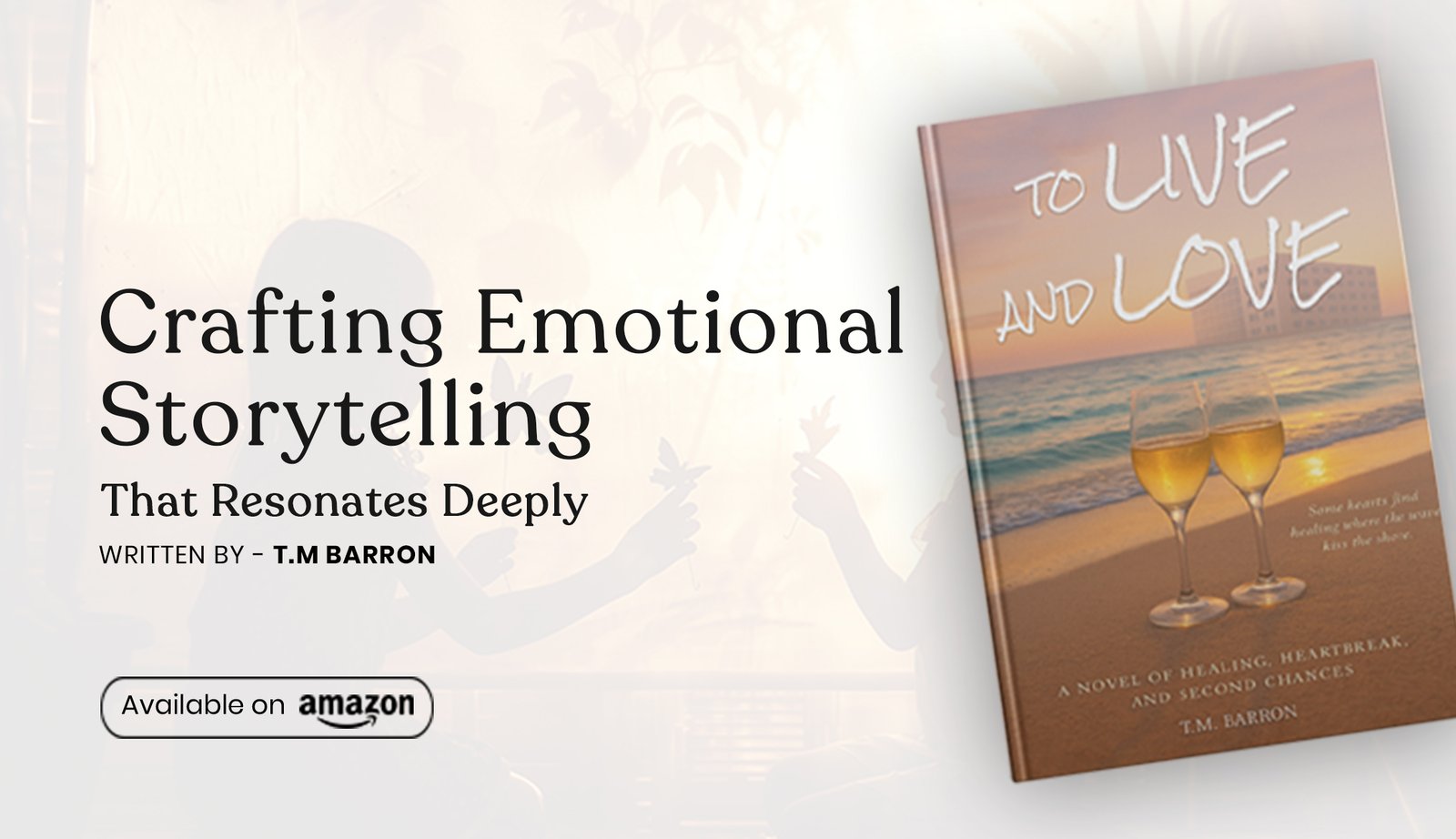
How T. M. Barron’s To Live and Love Masters This Craft
In To Live and Love, T. M. Barron exemplifies emotional storytelling with remarkable sincerity.
Kennedie, a dedicated nurse, travels to Turks and Caicos seeking respite from burnout and loneliness. She does not expect transformation—only escape. Gunner, an ambitious architect, carries his own emotional burdens, shaped by past disappointments and external pressures.
Their meeting unfolds gradually. There is no immediate fairy-tale certainty. Instead, conversations build connection piece by piece. Shared experiences reveal vulnerabilities neither intended to expose.
Barron skillfully weaves vulnerability in romance novels into their dynamic. Kennedie must confront her fear of risking her heart again. Gunner must examine the walls he has built to protect himself. Their hesitations feel real because they stem from genuine emotional history.
The Turks and Caicos setting amplifies intimacy without overshadowing character development. Island sunsets create reflective space where emotions surface naturally. Away from routine distractions, Kennedie and Gunner are forced to confront their internal struggles.
Through gradual emotional progression, the novel creates intense emotional connections in love stories that resonate. Love does not erase their past, but it empowers them to move forward.
To Live and Love stands as a compelling example of love and emotional healing in fiction. The characters grow not because love is easy, but because they choose vulnerability despite fear. That choice is what makes the story unforgettable.
Final Thoughts
Great romance transforms through authenticity, vulnerability, and emotional growth. Emotional storytelling is the thread that binds these elements together, creating narratives that feel personal and powerful.
By grounding conflict in real emotion, allowing gradual character development, and weaving healing into love, authors craft stories that linger long after the final page.
To Live and Love reminds readers why romance remains such a beloved genre: it offers hope. It demonstrates that even weary hearts can find renewal. It shows that vulnerability is strength.
When emotional storytelling is done well, readers close the book not just entertained but moved, inspired, and ready to believe in love again.
FAQs
Q1: What is emotional storytelling in romance novels?
A1: Emotional storytelling is the craft of creating narratives that evoke genuine feelings through authentic characters, vulnerable moments, and relatable emotional journeys. It allows readers to connect deeply with fictional relationships.
Q2: What are the key emotional storytelling techniques that make romance novels powerful?
A2: Key techniques include creating vulnerable, flawed characters; grounding conflict in real emotional stakes; allowing gradual growth; and weaving love and emotional healing into transformative arcs.
Q3: How do emotions and character development work together in romance?
A3: Emotions drive character growth. Heartbreak builds resilience, vulnerability fosters intimacy, and love inspires meaningful transformation.
Q4: Why is vulnerability in romance novels so important?
A4: Vulnerability creates authenticity. When characters reveal fears and hopes, readers recognize themselves, forming deeper emotional connections.
Q5: What romance novel is a great example of emotional storytelling?
A5: To Live and Love by T. M. Barron beautifully demonstrates emotional storytelling through vulnerable characters, intense emotional connections, and a journey of healing and second chances.